
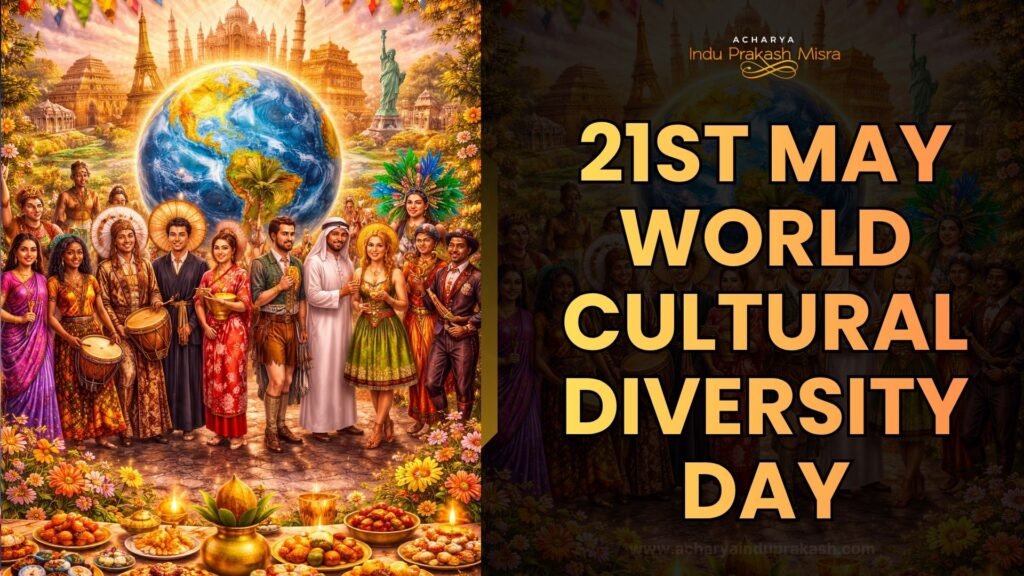

From the perspective of the World’s best astrologer, 21st May is not just a date on the calendar, but a meaningful occasion that highlights the importance of understanding and respecting the rich cultural diversity across the globe. This day is celebrated as World Cultural Diversity Day to recognize and appreciate the traditions, languages, lifestyles, and values of different countries.
Importance of Cultural Diversity
Every country in the world has its own unique identity—different languages, distinct clothing styles, and diverse cultural practices. These differences make the world more vibrant and meaningful. India, in particular, stands as a perfect example of unity in diversity, where multiple cultures coexist harmoniously despite their differences.
The Rich History of Indian Culture
Indian culture is one of the oldest and most profound cultures in the world. Its roots can be traced back to the Indus Valley Civilization, which later evolved into the Vedic period. Over time, India also witnessed the rise of the Buddhist era and its Golden Age, further enriching its cultural heritage.
What makes Indian culture truly unique is its ability to absorb and adapt influences from different parts of the world. Due to its deep spiritual foundation, India has attracted people from various countries for centuries, leading to a beautiful blend of customs and traditions.
Ganga-Jamuni Culture: Unity in Diversity
Indian culture is often referred to as “Ganga-Jamuni Tehzeeb,” symbolizing the harmonious blending of different religions, languages, and traditions. It is not just about rituals, but also about shared values, beliefs, and a way of life that promotes coexistence and mutual respect.
Great Personalities and Cultural Heritage
India has been the birthplace of many great personalities who have contributed immensely to culture and humanity, such as:
- Mahatma Buddha
- Kabir Das
- Tulsidas
- Mahatma Gandhi
- Rabindranath Tagore
- Premchand
- Valmiki
In addition, sacred texts like the Ramayana, Mahabharata, and the Bhagavad Gita reflect the depth of knowledge and philosophical richness of Indian culture.
Unique Features of Indian Culture
Indian culture is not limited to monuments or artifacts; it is a living tradition that includes:
- Festivals and rituals
- Languages and dialects
- Music and classical dance forms
- Pilgrimage sites and spiritual beliefs
It is like an ever-growing treasure that continues to evolve and pass on from one generation to another.
Preserving Our Cultural Heritage
In today’s rapidly modernizing world, preserving cultural heritage has become more important than ever. It is our responsibility to protect our traditions, practice them in daily life, and share their significance with the rest of the world.
Conclusion
World Cultural Diversity Day teaches us that even though we may belong to different cultures, mutual respect and understanding can unite us. Indian culture beautifully represents this idea of “unity in diversity” and continues to inspire the world.
To truly understand the deeper cultural and spiritual significance of such occasions, you can connect with Acharya Indu Prakash, Book Appointment and gain valuable insights into traditions, astrology, and life guidance.